Why Your RTO Policy is DOA
The question every company is asking is "how do we get people back to the office?” However, this perspective falls short. The better question is: "Why would someone choose to be here when they don't have to be?"
Those two questions lead to very different answers — and ultimately, very different office environments.
The first question is a compliance problem. Employee engagement is solved with mandates, badge tracking, and strongly-worded all-hands emails. It brings bodies into a building. But stirs potential resentment and detachment.
The second question is a design problem. This perspective sets out to solve the questions by asking what a space communicates, how it feels, and most importantly, whether it was built for the people inside it.

Art of Looking
When was the last time you looked at something, like really took the time to take in what’s in front of you. Inspect the details, consider the content, think about what you see? Probably, not very recently. Unfortunately, most of us are not really looking at the world around us (any more). Social media and the speed of our ever changing technological world has forced a certain kind of immediacy into everything we do– from work, to entertainment and even leisure. What we are left with is a surface level relationship with the things that are actually meaningful to us.

How to Use Color to Work, Think, and Create Better
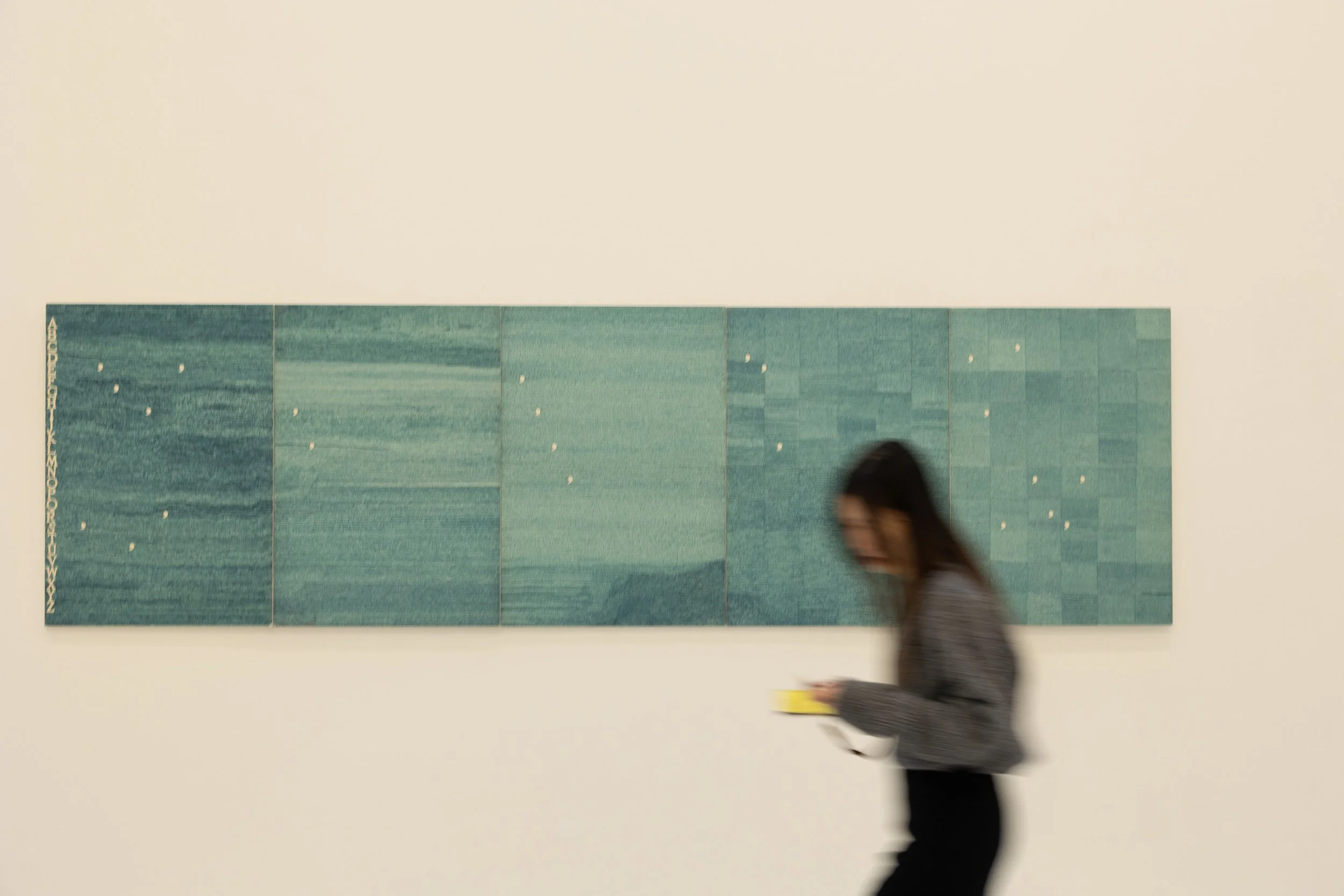
Choosing art that introduces the right colors and the right emotional register, simultaneously, is more powerful than just color alone. It gives the nervous system something to connect with rather than simply respond or react to. And this connection is where the real shift in output happens.

Bad Art – Why We (A/O) Do What We Do
A room is never just a room. It's a system, one that's either working for the people inside it or quietly working against them. The wrong visual environment doesn't announce itself. It just creates a low-level resistance, a reason you'd rather be somewhere else, a meeting that ends a little flat. And because no one can name it, no one fixes it. That conference room had every element of a great creative space — and nobody wanted to be in it. The result was a $50,000 table that no one wanted to sit at.